Description
Lophophora Williamsii Cactus | Naturally Imperfect Live Cacti
We hold our Lophophora williamsii plants to exceptionally high standards. Prior to shipment, every plant is carefully inspected both above and below the soil line. Specimens that do not meet our strict aesthetic criteria are listed here.
These Lophophora williamsii plants are fully healthy; however, minor cosmetic imperfections prevent them from qualifying for our primary listings. This can be rust spots, physical damage from neighboring cacti or signs of etiolation. As a result, these live cacti offer outstanding value and often return to near-perfect form after just one growing season.
Our iron clad plant 14 day guarantee still applies to these cacti.
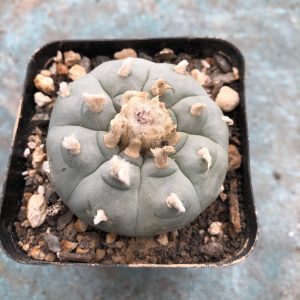
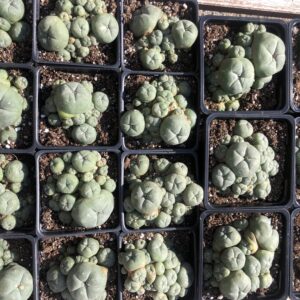
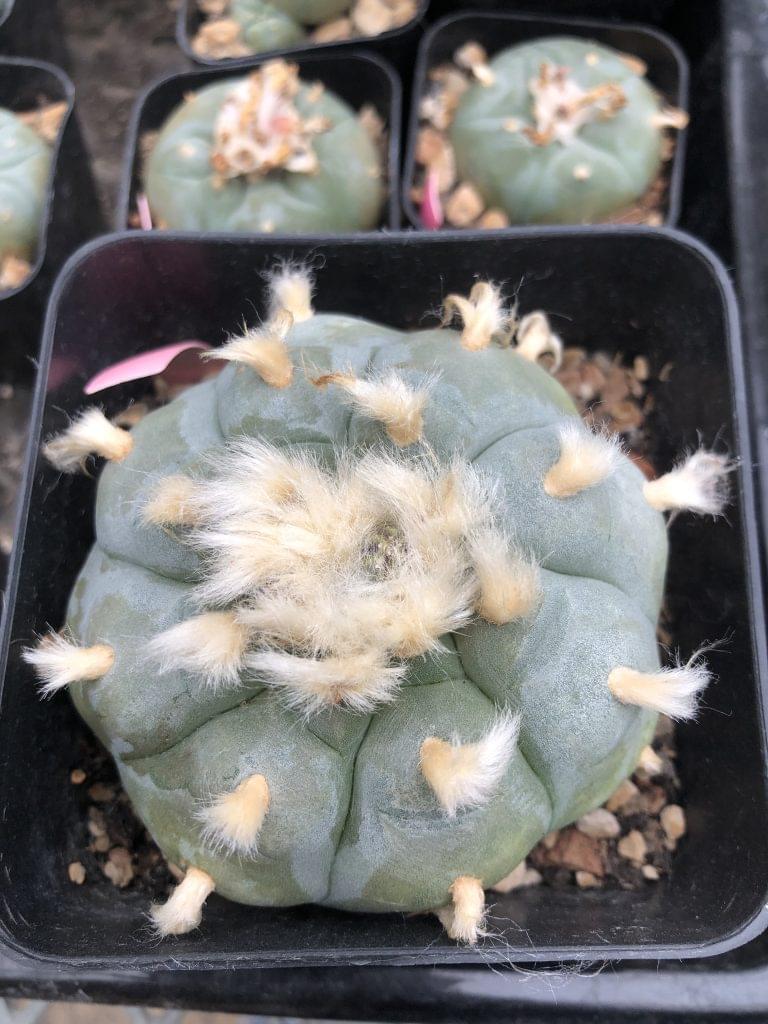
In many cases, there are no visible imperfections above the soil line, with minor flaws present only below the surface. The photos shown represent a sample selection from this category.
Limited Quantity
25% – 50% off our regular priced Lophophora williamsii cacti.
Our Lophophora williamsii are naturally cultivated at our nursery in specialized mineral soil, resulting in excellent root development and strong resistance to environmental stresses. Also known as peyote, Lophophora williamsii is an endangered spineless cactus native to Northern Mexico and South Texas. Its stem is glaucous green, dull bluish, or greyish green, very succulent, globular, top-shaped, or somewhat flattened with a woolly top; The subterranean portion of the stem extends deep below the surface of the ground and transitions smoothly into a large taproot which acts as a water reservoir during the dry season.
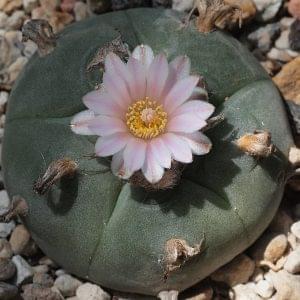
Most young plants have 5 ribs, while older specimens can grow up to 13 ribs. They usually grow solitary, but can also grow caespitose. They maintain a large subterranean taproot which acts as a water reservoir during the dry season. Once mature they regularly display beautiful pink flowers throughout the summer months. However, Lophophora is a slow growing cactus. It can take a decade to reach flowering age.
Care Instructions
Lophophora enjoys the company of other plants and does well potted in large groups.
Light:
Bright, indirect light or gentle sun. Peyote should be grown in partial shade to avoid damaging the cactus from intense sunlight.
Water:
Water sparingly. Allow soil to fully dry between watering. Reduce watering significantly in winter.
Soil:
Well-draining cactus or mineral soil mix is essential.
Growth Rate:
Very slow — patience is rewarded with long-term beauty.
For our most outstanding plants see our Lophophora williamsii fine specimens. Likewise, you are a wild plant enthusiast and prefer hard grown cacti see our Lophophora williamsii wild specimens.
An extensive selection of other rare Lophophora cactus seeds.
See the cactus propagation guide has tips on how to best care for your Lophophora williamsii cactus.
Learn more about this threatened species and current conservation efforts. The Cactus Conservation Institute is a great resource.
📦 Shipping & Quality Assurance
-
Plants are shipped bare-root to ensure safety in transit
-
Secure, discrete protective packaging to prevent damage
-
Only healthy, pest-free specimens are shipped
❓ F.A.Q ❓
Is this cactus difficult to care for?
Lophophora Williamsii is easy to maintain once established, provided it receives proper drainage and minimal watering.
Will the plant look exactly like the photos?
Each cactus is unique in shape and size. Photos represent the general appearance of the species and the plants shipped.
Is this a fast-growing cactus?
No — this species grows slowly, regarding those who are patient, which is part of its appeal to collectors.