Description
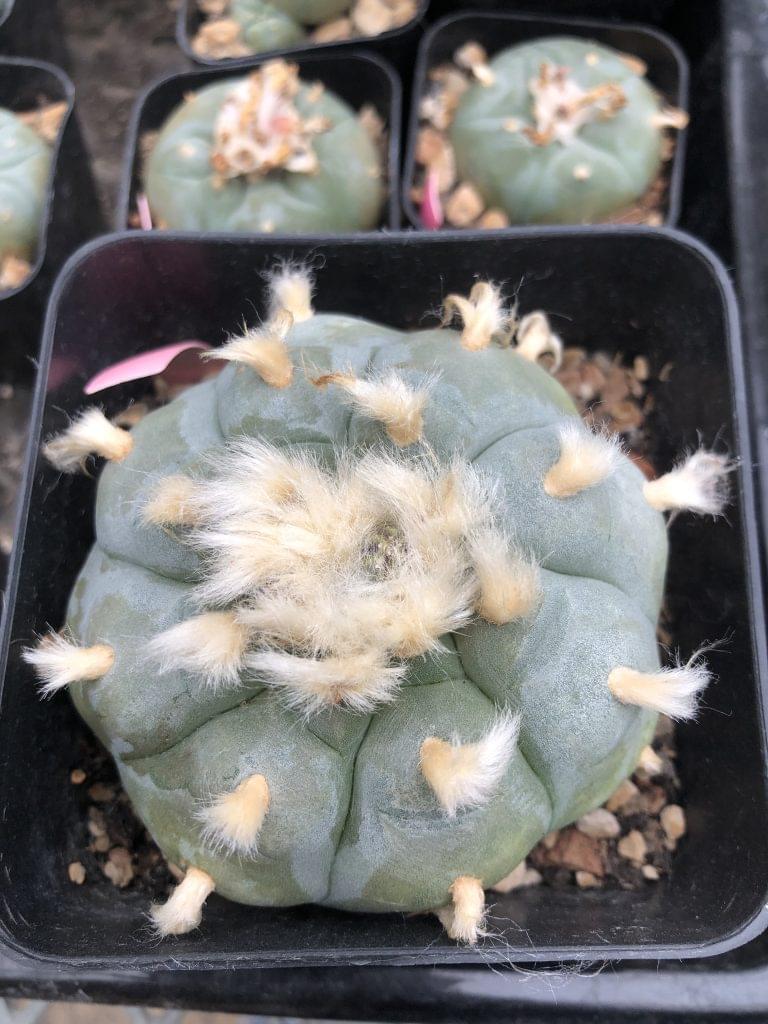
Mammillaria Luethyi
This species grows on limestone slabs (rocky terrain) in Chihuahuan semi desert. Lüethy states that upon revisiting the type locality ten years after its discovery, the area showed no sign of having been disturbed (Lüethy 2007). This would suggest that all material in cultivation has resulted from propagation of plants from the original collection. This species is widely and successfully cultivated. If the two locations were publicly known the threat from amateur collectors would be very high leading to the species becoming Critically Endangered or Extinct in a very short period of time. The precise locality is known only to a small number of experts. Despite the readily available populations in commercial cultivation, an intensive search for the localities continues by amateur and commercial collectors.
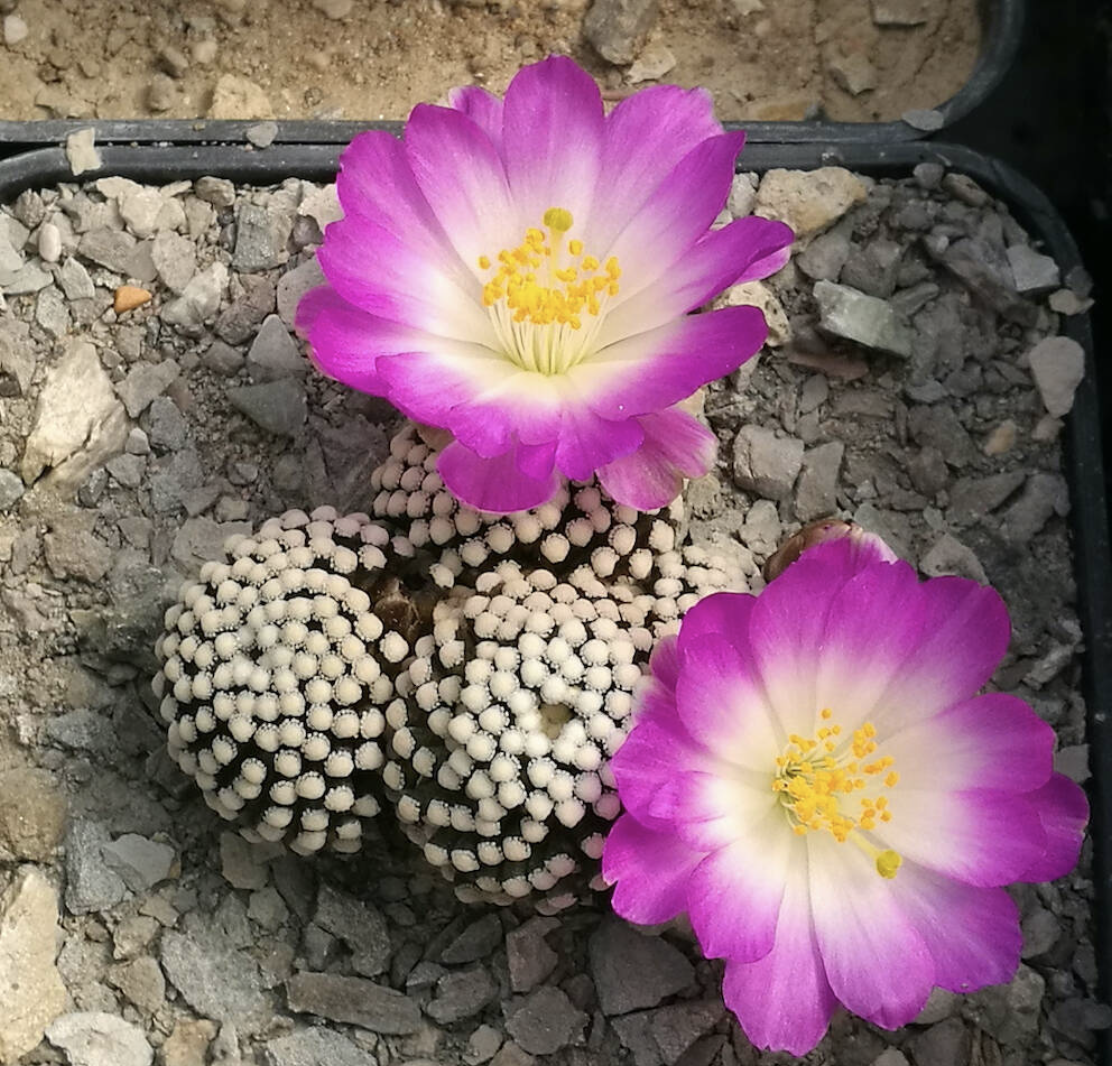
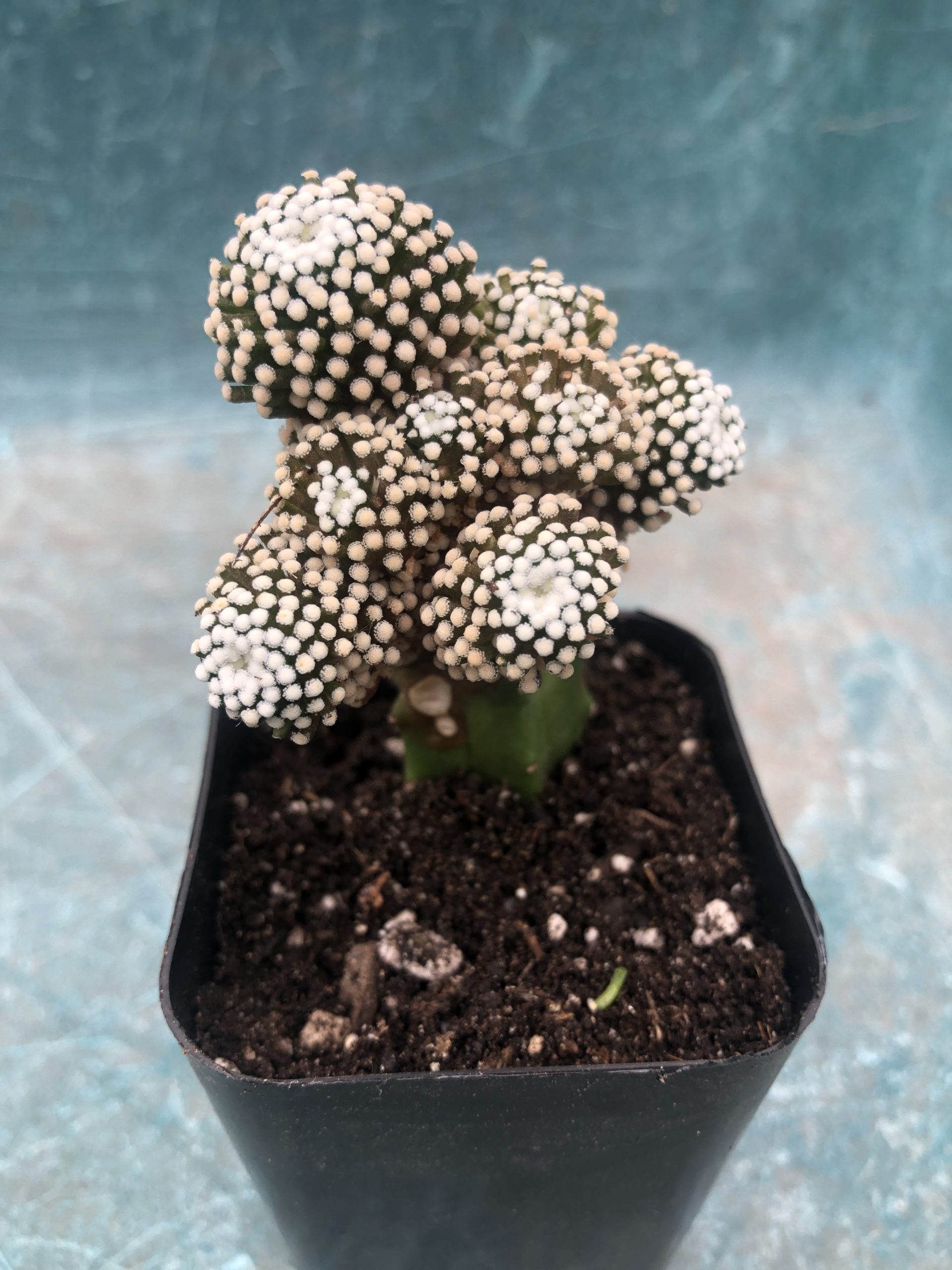
Mammillaria luethyi is a very tiny plant, but by far one of the most spectacular members of its genus, distinctive when not in flower because of the ‘spination’ (if it can be called that!) at the tips of the tubercles, and even more magnificent in flower. It is solitary or branching in several stems, mostly beneath the ground. This species is the most sought after cactus by collectors because of its rarity and unusual spines.
Mammillaria luethyi is one of the few species of cactus with cryptocarpic fruits. That is, the fruit and seeds are produced and retained inside the stem of the plant. After the flower is finished and dropped off, the stem closes over the fruit and the fruit/seed gradually ripens within. The following years the fruit may remain within the body at the axil, or may protrude a bit. A thin membrane will be above the part where ripe seed can emerge. As the plant swells with the new growing season, the membrane fractures, and some seed from the past years can little by little drop down and germinate in the close proximity, forming small colonies.
But usually the seeds remain within the plant body for several years or for the whole life cycle of the plant, and frequently they will be released only at the death of the plant after the disintegration of the old stem.
It is possible to collect fruit and seeds only by means of a thin pointed forceps. The seeds’ vitality lasts for many years and moreover seeds contain inhibitors that preserve them from premature germination. Generally fresh seeds won’t germinate very well, only old seeds do. The complete germination of this kind of seed may take
several years (Some will sprout unexpectedly after 5 or 8 years!). Because of the above peculiarity, seeds and plants of cryptocarpic Mammillarias are seldom available from commercial sources.